Showing posts with label Geneva Motor Show 2014. Show all posts

Friday, 7 March 2014

Hyundai PassoCorto

New two-seat Hyundai sports car concept designed to appeal to young drivers, gets 1.6-litre twin-turbo power and 262bhp
 
Hyundai’s new sports car, christened the PassoCorto has been unveiled at the Geneva motor show. The two-seater sports car has been designed by the IED design school in Turin, in collaboration with Hyundai. The students at IED were given a brief to design a car for a young audience that’s always connected to the web and social media. The car was designed as a combined effort of IED students, lead by Pininfarina designer Luca Borgogno and Hyundai’s European design centre.
The PassoCorto concept measures 4,100mm long by 1,880mm wide, with a height of 1,160mm and a wheelbase of 2,450mm. It is powered by a mid-mounted four-cylinder twin-turbocharged 1.6-litre engine with 262bhp. The concept's name means 'short wheelbase' in Italian. The concept features a large central air intake at the front, thin LED DRL strips, a creased bonnet and large side air intakes. At the rear, the concept tapers to a point with a single lighting bar and high-mounted exhausts. 
Hyundai has, however, confirmed that the PassoCorto concept is purely a design study, and will not become a production model.

Subaru Viziv

Subaru has pulled the wraps off its third version of the Viziv crossover concept at the Geneva motor show. The Subaru Viziv 2 Concept follows the Viziv and Viziv Evolution concept crossovers from the Geneva and Tokyo motor shows last year.
 
The concept is inspired by the phrase 'Vision for Innovation'. The car measures 4.4m long, and Subaru says the concept has been "designed as the ideal vehicle to support urban families with active lifestyles".
 
It showcases scissor front doors and sliding rear doors that slide backwards. Large 'C' shaped headlamps and round LED fog lights are prominent, while the hexagonal shape of the body is present in the front grille and is repeated at the rear.
 
It's powered by a 1.6-litre turbodiesel direct-injection Turbo Boxer engine plus three electric motors – the diesel engine and front electric motor powers the front wheels. At the rear, two independent motors – powered by a lithium-ion battery pack – supply torque to the rear wheels, while the plug-in hybrid powertrain is mated to a CVT automatic transmission.
 
Inside, the Viziv-2's cabin is focused on "function, safety and enjoyment" and projects to the driver Subaru's 'EyeSight' advanced driver assistance system with 360-degree sensing. The Viziv-2 also boasts stop/start technology and regenerative braking to further improve efficiency. Subaru's SI-DRIVE system allows the driver to select different profiles for the engine and transmission.
 
Travel conditions are apparently monitored by the EyeSight's stereo camera, where the data is then analysed to fine-tune the engine and motor inputs in order to reduce fuel consumption and emissions.

Mini Clubman

Mini showcased a concept at the Geneva motor show that previews the new Mini Clubman, scheduled for international launch by end of this year. 
While the exterior of the concept features some exaggerated proportions, it's also claimed to closely resemble the look of the production model. The new Clubman avoids the quirky layout of its predecessor as the single rear-hinged nearside door is binned in favour of a more conventional design with four front-hinged frameless doors. The traditional barn-style rear doors of its predecessors have been retained.
The new layout is aimed at introducing added levels of practicality and versatility to the Clubman in order to provide it with broader sales potential against premium-brand hatchback rivals.
Stretching to 4223mm in length, the latest Clubman is 262mm longer than the model it replaces. At 1844mm wide and 1450mm high, it is also 161mm wider and 24mm taller than before.
The added length, width and height make the new Clubman 126mm longer and 55mm wider than the existing Countryman — up until now Mini’s largest model — but 111mm lower due to its lesser ride height.
Among the flamboyant styling flourishes added to the concept are recessed headlights with daytime-running lights that form a continuous ring within the housing, so-called 'air curtains' to steer airflow around the wheel arches, 19-inch wheels and tyres, door mirror housings mounted on chromed arms and tail-lights that have been turned through 90 degrees to give greater horizontal emphasis to the rear end.
Inside, there’s a clean, sophisticated-looking dashboard which is claimed to point to how future Mini interiors will look. Premium materials including leather, various wood trims and chromed controls aim to provide the concept with an upmarket feel, although production versions will be rather less well appointed.
The centrepiece to the cabin is Mini’s traditional round centre dial, which houses a high-resolution screen. As with the new Mini hatchback, the main dials are housed within a dedicated instrument cluster behind the steering wheel. The centre console between the front seats is elevated, placing the gearlever and controls higher than in existing Mini models.
The new Clubman is set to get a similar engine line-up to that of the smaller three-door hatchback, which is due to go on sale globally next month. Included in the range are 1.5-litre three-cylinder and 2.0-litre four-cylinder petrol and diesel units in combination with either a standard six-speed manual or optional six-speed automatic gearbox.

Fiat Panda Cross

The Fiat Panda Cross, a rugged-looking version of the Panda 4x4, has made its world debut at 
the Geneva motor show.
 
Fiat has added new light clusters, fog lights and new front bumper to give the Panda Cross a more muscular look, while extended wheel arches, roof bars, a new rear bumper and special 15-inch alloy wheels complete its exterior modifications.
 
Inside, the Panda Cross gets leather trim and new standard equipment including climate control and Fiat's Blue & Me infotainment system.
 
The new Fiat also features a torque-on-demand system, found in the Panda 4x4, which uses a viscous coupling to distribute torque between the front and rear according to the available traction. A number of selectable assistance modes, including Hill Descent Control, are also available.
 
Fiat says it has also upgraded the car's suspension, which features a MacPherson arrangement at the front with a new torsion beam layout at the rear.
 
The Panda Cross will be available with two engines at launch, a 0.9-litre TwinAir turbocharged unit with 89bhp and 14.8kgm of torque, and a 1.3-litre MultiJet turbodiesel with 79bhp and 19.3kgm.
 
Fiat's Panda Cross is expected to go on sale later this year alongside the Panda Trekking and Panda 4x4.

Cadillac Elmiraj concept

The Cadillac Elmiraj concept, a four-seat two-door coupé, is on display at the Geneva motor show.
 
Cadillac's concept, a luxury 'grand coupé' previously seen at the Pebble Beach Concours d'Elegance 2013, is designed to showcase the company's future design direction for its performance and luxury cars. Featuring streamlined styling and a rear-wheel-drive layout, the Elmiraj picks up from where the Ciel concept left off.
 
The Ciel, which was revealed in August 2011, was a four-seat convertible with a twin-turbocharged hybrid powerplant. Cadillac's Elmiraj, however, packs a 4.5-litre twin-turbocharged V8. It's claimed to produce 500bhp and 69.1kgm, and utilises technology from Cadillac's current production twin-turbocharged V6.
 
Underpinning the new concept are prototype chassis and structural elements of future Cadillacs that claim to "expand the brand's commitment to lightweight rear-wheel-drive performance".
Other highlights include functional bonnet vents, 22-inch aluminium wheels, ceramic disc brakes and monoblock brake calipers. Cadillac's classic crest also appears on the car in a conceptual form, redesigned to match the Elmiraj's overall design and to reflect decades of evolution.
Inside, the Elmiraj features a luxurious blend of titanium, wood and leather finishes. The interior is designed to be driver-focussed and to deliver a comfortable, refined and upmarket experience. For example, the rear bucket seats slide forward to meet the passenger when entering the Elmiraj. They can recline too, further improving comfort.
 
Modern interior features include transparent analogue tachometer and speedometer gauges, behind which sit a modern high-resolution display for other instrumentation and a front-mounted camera display.
 
“We were influenced in particular by the 1967 Cadillac Eldorado – both its actual design and the fact that, in its time, that car was a very stark contrast and a new direction. More recent design like the CTS-V coupé and the ELR are provocative,” said Clay Dean, Cadillac's advanced design director.
 
“Both of these cars were major statements of performance and luxury and drove Cadillac forward into new territory."

Wednesday, 5 March 2014

Porsche 919

Radical V4-engined Porsche to contest World Endurance Championship and will head to Le Mans in June.
 
The first pictures of the new Porsche 919 hybrid racer have hit the web prior to the car's reveal at the Geneva motor show.
 
Porsche's 919 Hybrid will be driven in the World Endurance Championship this year, including at the Le Mans 24 Hours race in June. The 919 is powered by a radical turbocharged 2.0-litre V4 engine, but gets extra assistance from its KERS and exhaust heat energy recovery systems.
Energy stored by the 919 can then be used to power an electric motor, which drives the front wheels. Porsche's hybrid setup is similar to the system used by Audi, but different to that used by Toyota's LMP1 cars.
 
Amongst the drivers scheduled to drive the 919 is ex-Formula One star Mark Webber.
Pictures of the 919 show the car alongside the 911 RSR, which reportedly features a six-cylinder 4.0-litre boxer engine with 454bhp, connected to a six-speed sequential gearbox.

Gumpert Explosion

The Gumpert Explosion, a two-seat sports car with four-wheel drive, has been unveiled at the Geneva motor show.
The new creation from the niche car manufacturer – which hit financial troubles in 2012 – is a front-engined sports car with a tubular frame and a chassis made from carbon-fibre, glass-fibre-reinforced plastic and aluminium composite.
The vehicle was developed and constructed by a small team at GSM Gumpert in Ingolstadt, Germany. “We want to convey to all those drivers who love motorsports what it feels like to sit behind the wheel of a rally car," said company boss Roland Gumpert.
Power comes from a four-cylinder, 1984cc engine that produces maximum power of 414bhp at 6450rpm and maximum torque of 53.08kgm at 4550rpm. It will be offered with a six-speed automatic (with paddleshifts) or with a six-speed manual transmission.
Gumpert's figures suggest the Explosion can cover 0-100kph in three seconds flat. Although it hasn't confirmed the car's top speed, the manufacturer has hinted that the figure "starts with a 3", suggesting it is capable of more than 300kph.
The Geneva show car is the first pre-production model to be finished. The company has already started work on the series production variants and the first models are expected to appear later this year.

BMW 2-series Active Tourer

The new BMW 2-series Active Tourer is a versatile five-seat MPV which will usher in a new era of front-drive models after its debut at the Geneva motor show. The new BMW is due to go on sale in the UK in September.
The 2-series Active Tourer adopts a transversely mounted engine and standard front-wheel drive. This layout has never been used by a fully fledged BMW series-production model before but it is set to underpin an impressive assembly of new BMW models.
It will also be the first BMW to be offered with three-cylinder power - a compact new turbocharged 1.5-litre petrol engine, as featured in the new Mini hatchback.
The proportions of the 2-series Active Tourer differ greatly from those of traditional rear-drive BMWs, especially around the front end, which receives a comparatively short and heavily angled bonnet. The tall glasshouse also has a distinctive cab-forward influence not usually associated with BMWs.
At 4342mm in length, 1800mm in width and 1555mm in height, the 2-series Active Tourer is 17mm longer, 55mm wider and 135mm taller than BMW’s 1-series hatch. To put it into perspective, the Mercedes-Benz B-class, a similarly conceived front-drive MPV, is 4360m long, 1785mm wide and the same 1555mm tall.
The new MPV is the first BMW to utilise the company’s high-strength steel entry-level platform, as first unveiled by daughter company Mini on its new third-generation hatch.
The modular structure supports at least three wheelbases and variable track widths. This makes it suitable for a wide range of new models, including a successor to the X1 and a new front-drive, entry-level 1-series saloon - both under intensive development at BMW Munich-based engineering HQ right now.
The interior aims to provide more flexibility than traditional BMWs because of the space-saving potential of the transverse engine layout. The front seats are at roughly the same height as those in the X1 but they are more upright to free-up space behind them.
Boot capacity for the initial standard-wheelbase model is 468 litres, rising to 1510 litres when the rear seats, which split 40:20:40, are folded down.
Initially, the 2-series Active Tourer will have a three-pot direct-injection petrol and four-cylinder common-rail diesel engine shared with the new Mini. Further engines, including a four-cylinder petrol and three-cylinder diesels, are planned from early 2015.
Front-wheel drive and a six-speed manual gearbox will be standard, with an eight-speed auto optional. Some variants will get four-wheel drive.
Kicking off proceedings is the 218i Active Tourer, which gets a turbocharged 1.5-litre three-cylinder petrol unit with 134bhp and 162lb ft of torque. It will be joined at launch by the 218d, which has a 2.0-litre four-pot turbodiesel with 148bhp, 33.59kgm of torque and a combined economy of 29.3kpl.
Shortly after launch, the range-topper will be the 225i. It gets a turbo 2.0-litre four-pot with 227bhp and 35.6kgm. It covers 0-100kph in 6.8sec.
By this time next year, buyers will also be able to choose between additional front-wheel-drive 220i, 216d and 220d models as well as four-wheel-drive 225i Xdrive and 220d Xdrive variants.
The lightest of the launch models is the 218i Active Tourer, at 1320kg - the same weight as the Mercedes B 180.
Underpinning, the 2-series Active Tourer is a predominantly aluminium chassis with MacPherson struts at the front and a multi-link rear. BMW says that this makes it “the most dynamic front-wheel-drive model in its segment, with agile and sporting characteristics”.
Together with the standard suspension, BMW also plans to offer an M-Sport set-up with a 10mm-lower ride height and firmer settings.

Alfa Romeo 4C Spider prototype

The Alfa Romeo 4C Spider has been unveiled in prototype form at the Geneva motor show, sporting a canvas roof, plus different headlight, wheel and exhaust designs over the coupé. It will go to production in early 2015.
Alfa Romeo says the car’s weight gain has been limited to 60kg over the coupé, thanks to the use of a lightweight canvas roof, plus carbon-fibre rollover hoops, spoilers and windscreen frame. Alfa also says it has crafted the aerodynamics of the car to minimise roof-down turbulence.
The new dual-stage central exhaust system uses titanium and carbon tail-pipes, and has been developed by renowned motorbike racing exhaust manufacturer Akrapovic, which has worked in MotoGP, Superbikes and Motocross. It has an electrically-operated valve system, which can improve performance and enhance the exhaust note at the push of a button.
The cosmetic changes are notable for focussing on two areas of the coupé that have drawn the most criticism so far. It is not clear, however, if the new carbon-fibre clamshell headlights and milled aluminium wheels, finished in a gloss white paint, are set for production, or if they are if the changes would also be applied to coupé.
The 4C Spider is otherwise identical to the coupé, with power coming from the same four-cylinder, all-aluminium, 1750cc turbocharged petrol engine which drives the rear wheels via a six-speed, dual dry-clutch Alfa TCT transmission. Alfa says 0-100kph takes 4.5sec and top speed is in excess of 250kph - the same as the coupé. Weight distribution also remains 40:60 front-to-rear.
Finally, to complement its show-stopping presence, new carbon-fibre clamshell headlights have been fitted to the Alfa Romeo 4C Spider prototype, as have unique alloy wheels, milled from solid aluminium blocks, shod with bespoke Pirelli tyres. It's finished in three-layer gloss white, which helps emphasis the car’s sculpted shape and resolved surfaces.

Audi TT quattro sport concept

The new Audi TT quattro sport concept, an "extreme driving machine" capable of 0-100kph in 3.7sec according to its maker, has been unveiled at the Geneva motor show.
 
Audi's concept, which is based on the recently revealed TT, packs a 2.0-litre turbocharged engine that produces 414bhp and 46kgm of torque.
 
That means the engine – which features a forged crankshaft, a newly developed turbocharger and a gas-flowed cylinder head – produces 207bhp per litre, eclipsing the likes of the Mercedes A45 AMG's 178bhp per litre.
 
Power is sent to all four wheels via a six-speed dual-clutch transmission and Audi's quattro system, with the resulting traction allowing the concept – which weighs 1419kg with a driver – to make best use of its power.
 
Dr Ulrich Hackenberg, Audi's chief technical officer, said, "With our Audi TT quattro sport concept show car, we wanted to demonstrate what the new TT’s technology can do if you take it a step further."
 
Audi has worked to improve the TT's dynamic capabilities too, with lower and stiffer suspension. Other upgrades include 20-inch alloys with centre-lock fitment, semi-slick tyres, a carbonfibre spoiler to boost downforce and a 'single-frame' Audi grille.
 
Inside, the interior resembles that of the series-production TT but features alcantara trim, low-slung bucket seats, four-point harnesses and storage for two racing helmets.
Hackenberg added, "It's a car for the motorsports enthusiasts among our customers."

SsangYong XLV concept

The SsangYong XLV concept has been unveiled at the Geneva Motor Show, and closely previews a new production model which will allow the brand to compete in the fast-expanding compact SUV segment.
The XLV is a seven-seater, powered by a 1.6-litre diesel engine and an electric motor hooked up to a lithium ion battery.
At 4430mm in length, it is slightly longer than a Nissan Qashqai. In production, a shorter five-seat version will also be offered alongside the seven-seater. The seating is an innovative 2+2+2+1 arrangement, with the seventh seat able to slide between the second and third rows.
The clean, crisp look of the concept previews the next generation of SsangYong’s design language, which will be rolled out on future models. The XLV’s interior also has a much more upmarket look and feel than the firm’s current cars, and is expected to be extended to future production models. 

Hyundai Intrado concept.

Korean car-making giant Hyundai has unveiled a vision of its future at the Geneva motor show, in the form of the Intrado concept.
 Geneva 2014: Hyundai showcases Intrado SUV concept
It's a super-lightweight crossover coupé built of innovative materials, featuring a second-generation hydrogen fuel cell powertrain, and represents a new design philosophy for Hyundai; part of its new theory is that minimalist simplicity and functionality will be paramount in all of its cars.
 
The Intrado is the result of an advanced research and development project undertaken at Hyundai/Kia’s European technical centre in Frankfurt.
 
Design president Peter Schreyer says it has been designed "from the inside out: to put the driver at the centre of the driving experience; to be perfect in an ergonomic sense; and to provide a genuinely multi-purpose ownership experience – capable enough to suit an active lifestyle, small enough to park in the city, but comfortable and efficient over long distances."
 
The Intrado’s carbonfibre-reinforced plastic superstructure is genuinely ground-breaking. Under its steel panels is a skeleton frame made up of inter-connected one-piece 'hoops' of moulded CFRP. Each 'hoop' has several flexible tubes of woven carbonfibre inlayed within it to run in longitudinal cavities, before the hollow moulding is closed around those tubes and filled by a process called resin transfer moulding. The finished hoops are then bonded together to form a tubular CFRP spaceframe of a sort. The resulting monocoque chassis, says Hyundai, is fully-flexible in design terms, 70 percent lighter than an equivalent steel body-in-white and twice as torsionally rigid. The materials technology, developed in tandem with Korean partners Hyosung and Lotte Chemical, could also eventually be 'productionised' at a cost viable for the mass-market, according to Hyundai.
 
Powering the Intrado is a development of Hyunda's fuel cell powertrain. Under the bonnet is mounted Hyundai's proprietary fuel cell stack and electric motor, which drives the front wheels. Converted and scavenged power is stored under the driver’s seat in a 36kWh lithium-ion battery, while the car’s supply of hydrogen is carried in high-pressure tanks under the back seats and boot floor. Power, range and performance specifics have yet to be made public, likewise any information about overall kerbweight.
 
The Intrado is a four-seater with a pillarless body and frameless coach doors. Its body surfaces have been left "clean and undecorated" by Hyundai’s stylists, with the panels surrounding the wheelhouses in particular acting as aerofoils, and much of the rest of the metalwork serving function as well as form. The car’s more upright hexagonal grille and headlight arrangement does define Hyundai’s ‘corporate face’ for the next generation of production cars, however.
 
Hyundai brand European design chief Thomas Burkle explained the Intrado’s primary mission as "engaging with a generation of younger buyers with active, spontaneous and opportunistic lifestyles." 
 

Tuesday, 4 March 2014

Jaguar XE Sedan

Jaguar’s much anticipated baby sedan will be named XE when it goes on sale in around twelve months time. The announcement was made at the Geneva motor show today. The car will sit underneath the XF in Jaguar's model line-up.
 
Images of the Jaguar XE's chassis appear to show a very short rear deck and steeply sloping rear windscreen. The result is shape that is much less of the conventional three-box saloon and something closer to a fastback.
 
At the front, the disguise doesn't hide the fact that the car also has a very low nose and low bonnet line, with the grille and headlamps sited a little closer to the ground than on rival compact premium saloons.
 
 
The XE will be the first car in its segment to use an aluminium monocoque and Jaguar says it is "set to be the most advanced, efficient and refined sports sedan in its class". The XE is the first product spawned from Jaguar's new architecture which was showcased in the C-X17 SUV concept.
 
Jaguar has also confirmed it will be powered by J-LR's new family of high-output four-cylinder engines. The engine range will be called Ingenium and built at J-LR's new engine plant in Wolverhampton. The engine family has been designed to work in transverse and longitudinal configurations and will enable the option of rear- or four-wheel drive. 
 
 
Speaking at the Geneva show Jaguar Land Rover boss Ralf Speth said: “We announced just a few weeks ago that our new Engine Manufacturing Centre would produce a new family of premium, lightweight, low-friction, low emission four-cylinder petrol and diesel units. The first of our Ingenium engine range will be used in our all-new mid-sized Jaguar sports sedan. That car will be called the Jaguar XE, and it will be unveiled in production form later this year.”
 
We understand that the XE has a particularly sophisticated aluminium suspension set-up, which is intended to help the XE out-handle the BMW 3-series and finally make Jaguar a contender in the mainstream premium car market by way of its driving dynamics.
 
 
Jaguar boss Adrian Hallmark added that the key attributes of the 3-series rival must be that it is better to drive, feature more advanced technology and have a more alluring design than any of its rivals.
 
“The key has been getting the F-type at the heart of our range,” said Hallmark. “It stands for everything Jaguar is about and is utterly distinctive. It is the purest expression of what all our cars should be about. Now we must apply that strategy to forthcoming cars, including the baby saloon. The headlines of that car must be innovative technology, the most desirable design and a driving sensation that makes the car feel more alive than anything the opposition has to offer.”
 
 
“We have a view on how we can differentiate ourselves from them, and we believe that at the end of the scale Jaguar will sell in, which is traditionally the higher price point of the market, we can win customers by being distinctive, by avoiding being aloof and by standing for something that is just a little bit different.”
 
 
The Jaguar XE is expected to evolve into a full line-up of body styles, including an estate, coupé and convertible. Jaguar is also tipped to be developing a crossover in tandem with the baby saloon, with the styling and capability focused more around on-road dynamics than any serious off-road capability. It is likely to be launched in 2016 or 2017. 

Mitsubishi AR concept

The wraps are off the Mitsubishi AR concept at the Geneva motor show. It marks a return for Mitsubishi to the MPV segment following the discontinuation of the Grandis in 2011.
Geneva 2014: Mitsubishi AR concept MPV unveiled
 
The AR uses the same 1.1-litre three-cylinder, direct-injection, turbo-hybrid powertrain as the XR-PHEV. It uses a belt-driven generator to instantly restart the engine and delivers "gutsy" torque under acceleration.
 
The company says the concept "offers both the mobility of an SUV and the occupant space of an MPV". The concept features an enveloping interior design. 
 
The Concept AR measures 4350mm long, 1780mm wide and 1690mm high, and uses lightweight high tensile steel. Weight saving continues inside, with a "no-frill design", according to its makers.
The concept is a four or six-seater depending on layout, while the front pair of chairs can rotate through 180 degrees to turn the cabin into a living space. Mitsubishi says the focus was on creating a relaxing envirionment: ambient roof lining and slits in the sides allow "gentle winds and other sounds" to emanate into the cabin.

Volvo Concept Estate

This is the Volvo Concept  Estate.

But the great Volvo doesn't want you looking at the exterior of the Concept Estate, however lovely it may be. Volvo wants you to admire the Concept Estate's dash and centre console, which, it says, previews a new in-car control system that will span the new generation of Volvos.

Swede dreams: it’s Volvo’s Concept Estate

Said control system is based around a massive iPad-esque touchscreen supplemented by but a single row of buttons, doing away with the festival of switchgear found in the current crop of Volvos. That touchscreen responds to all the pinch'n'swipe gestures you'll be familiar with from your smartphone, though Volvo is keen to stress the screen won't distract you with a cheeky game of Angry Birds.

"It is fine for an ordinary tablet to compete for your full attention, but a touchscreen in a car is very different," says Ingenlath. "Information must be clear and user-friendly, without turning up the visual volume so much that you risk losing focus on the road."

We've tested touchscreens good and bad in recent months, and are yet to be convinced they currently offer an improvement on the, erm, ‘control knob' systems used by BMW and Mercedes with iDrive and Comand respectively. It'll be interesting to see if design-focused Volvo can nail it at last.

No word on what engine lurks beneath the Concept Estate, but it's safe to assume it'll be a 2.0-litre four-cylinder from the company's new standardised range of powerplants.

So it's unlikely to be a BMW M3-beater, but that just gives you more time to admire the Concept Estate's lovely cockpit, with its Scandinavian-hunting-lodge wood and check seats.
If at least some of this car's interior and exterior pizzazz makes it onto the next generation of Volvos, are we heading into another golden era for the Swedes?

Rolls Royce Ghost II

A revised Series II version of the Rolls-Royce Ghost is on display at the Geneva motor show ahead of it going on sale this summer.
 
The changes include a subtly evolved exterior look, new options and interior tweaks. The 563bhp V12 engine continues unchanged, but cornering ability, ride quality, rear stability and driver feedback are all said to be enhanced, according to Rolls-Royce.
 
“The customers’ main message was: ‘Don’t mess with the shape’,” company boss Torsten Müller-Ötvös told Autocar at a preview event of the new model. 
 
The styling changes are minimal and include reshaped front headlights with new LED daytime-running lights, revised surfacing, including on the bonnet, and revised bumpers to give the Ghost greater visual width and height. New paint and wheel options are other additions. 
 
Inside, there are new seats, complete with greater electronic adjustment and increased heating options. The rear seats are also revised, with new business and relaxation positions.
 
The instruments have been tweaked slightly, too. New trims are another addition, as are two new wood veneers. Infotainment is enhanced, aided by on-board Wi-Fi, a new 10.25-inch multimedia screen and a touchpad controller for infotainment. The sat-nav is also linked to the transmission, to allow the car to pre-empt the selection of the right gear.

New Mercedes-Benz S-class coupe

The all-new Mercedes-Benz S-class coupé has been unveiled, and will become the first series-production road car to feature an advanced tilt function capable of leaning the car into corners when it goes on sale towards the end of this year.
 
The new feature is integrated into the so-called Magic Body Control system first seen on the latest S-class sedan. It forms part of a series of new comfort-enhancing technologies brought to the two-door rival to the Bentley Continental GT. 
 
The S-class coupé made its public debut on the eve of the Geneva motor show. It replaces the CL at the top of Mercedes’ regular line-up.
 
The new model, which goes under the internal codename C117, has been given a significantly more muscular appearance. The styling flourishes are aimed at visually separating the S-class coupé from the sedan more than previous versions of the big two-door have done.
Mercedes has confirmed one initial engine for the new S-class coupé. The twin-turbo 4.6-litre V8 petrol unit is carried over from the CL, but with a series of detailed changes that boost its power output by 20bhp to 448bhp while retaining the same 71.34kgm maximum torque rating. That engine will appear in the S500 coupé. Alongside standard rear-wheel drive, buyers will also get the option of 4Matic four-wheel drive for the first time.
 
Performance figures have not been revealed yet. However, Mercedes sources suggest that the S500 coupé will closely match the standing-start acceleration and top speed of its CL predecessor, which had an official 0-100kph time of 4.9sec and a top speed limited to 250kph.
An S63 AMG variant will be revealed at the New York motor show. This model will use the same 577bhp twin-turbocharged 5.5-litre V8 engine as the S63 AMG saloon. A V12-powered S65 AMG variant is also planned. 
 
Although it has not yet been officially confirmed, a further two petrol engines will be added to the line-up after the S500 and S63 AMG versions. One will be the updated twin-turbocharged 6.0-litre V12 recently unveiled in the S600 saloon. With an added 500cc of capacity over the unit that it replaces, it is expected to provide the upcoming S600 coupé with 516bhp.
On top of the optional tilt function, the new car’s Magic Ride Control system also boasts a road scanner function. This uses the stereo camera mounted within the windscreen to digitally scan the road surface and automatically alter the stiffness of the hydraulic dampers in order to improve the ride comfort. 
 
The S63 AMG coupe is scheduled to go on sale in international markets from November.

Volkswagen T-Roc SUV

Volkswagen is set to launch at least four new SUVs over the next three years, with the Golf-based T-Roc concept on display at the Geneva motor show forming the centrepiece of the new expansion strategy.

Earlier this year, the VW CrossBlue seven-seat SUV was unveiled at the Detroit motor show, with insiders admitting that the US-focussed car was being prepared for launch in 2016.
A reworked version of the VW Tiguan is being engineered at the same time, and is also mooted for launch in 2016.
The Golf-based T-Roc is then set to launch in 2017. VW's head of research and development, Heinz-Jakob Neusser, told Autocar: "The final decision will depend on reaction to this concept and be made later, but it is clear that we are developing a wider SUV strategy. The T-Roc fits in very well with that strategy: it sits on the MQB platform and is fully compatible with all the powertrains and modules in the VW Golf. The production CrossBlue and reworked Tiguan leave us room for other SUVs below them in size, that is clear."
As well as the T-Roc, Neusser confirmed that the VW Taigun small SUV remains under evaluation. "This car is also close to a decision on whether it will make production," said Neusser. "We have not set a date for the final decision, but I can tell you that it will be soon."

Skoda VisionC concept unveiled

Skoda has taken the wraps off a dramatic-looking concept that previews a new five-door liftback model currently being primed for production and likely to join the carmaker's line-up in 2016.
Geneva 2014: Skoda VisionC concept unveiled
 
Called the VisionC, the new concept paves the way for the introduction of the new liftback, which has been conceived to fill the gap between the Octavia and Superb in Skoda’s existing range.
The new Skoda is based on the same hot-formed, high-strength steel MQB (modular transverse architecture) platform as the Octavia, alongside which it is planned to be built.
 
While the basic silhouette of the concept and five door liftback layout is expected to be brought over into production with little or no change, the detailing and rear end will be further refined.
Many of the VisionC’s design cues, including its bold chromed grille, taut surfacing treatment, precisely structured flanks and triangular theme to its lamps, will be reflected on other future Skoda models.
 
Official dimensions are yet to be revealed, although Skoda suggests the VisionC runs to around 4700mm in length and 1820mm in width, allowing it to offer what they describe as “more than sufficient space for four adults and their luggage”.
 
The VisionC is powered by the same engine used in the recently introduced Volkswagen Golf TGI and Audi A3 G-Tron. The 108bhp turbocharged 1.4-litre four-cylinder direct injection engine can run on either petrol or natural gas. 
 
Suggestions are the production version of the new Skoda will eventually offer a wide range of transversely mounted four cylinder petrol and diesel engines ranging in capacity from 1.4 to 2.0-litres. Alongside standard front-wheel drive, it will also offer four-wheel drive in combination with a range of more powerful engines, according to company officials.
Skoda also hints the VisionC will provide the basis for a new 280bhp turbocharged 2.0-litre four-cylinder petrol powered four-wheel drive performance flagship that will form the basis of a revised line of Skoda vRS models.

Bentley Continental GT Speed

The Bentley Continental GT Speed has been updated for 2014, and is now the fastest production car ever made by the firm. The car has made its debut at the Geneva motor show.
 
With power from its 6.0-litre twin-turbocharged W12 engine pushed to 626bhp, the Continental GT Speed is now capable of 331kph in coupé form, while the convertible has a new top speed of 327kph.
Geneva 2014: Bentley Continental GT Speed unveiled
 
Bentley says it has lowered the GT Speed's chassis and stiffened its suspension, as well as adding new exterior paint trim to the front splitter, side skirts and rear diffuser. The interior of the GT Speed has also been updated, and now comes with new stitching and colour options. 
 
The company has also introduced seven new options packages for its Continental models, each featuring different specifications. Among the luxuries offered are new in-seat neck warmers, drilled alloy foot pedals, new boot carpeting and a heated steering wheel. Deliveries of the new GT Speed are likely to start sometime in the middle of this year.
 

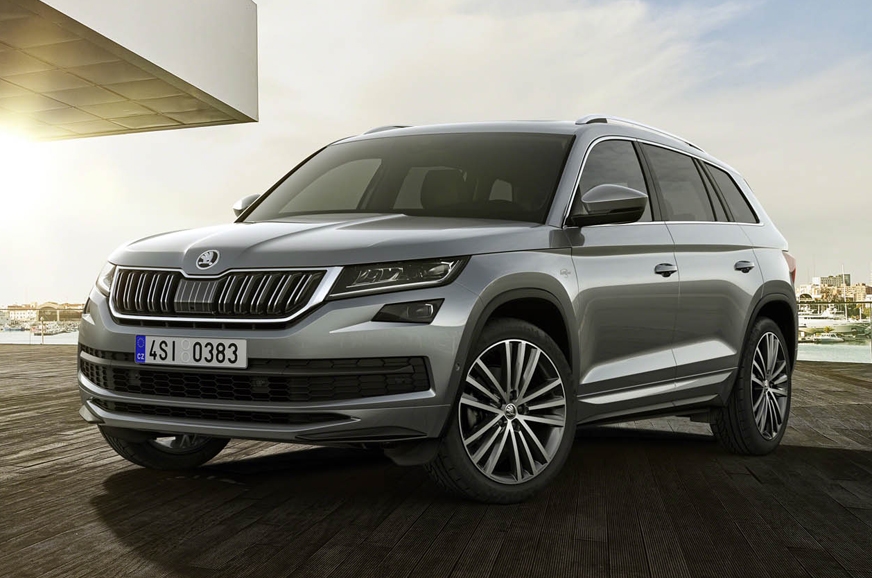
Skoda Kodiaq L&K revealed

On the exterior, the Skoda Kodiaq L&K Edition (named after the founders, Laurin and Klement) gets a new chrome-finished grille, LED he...